John Kavik
1897 - 1993
John Kavik Biography
1897 - 1993
John Kavik was born in 1897 near Uqsuqtuuq (Gjoa Haven) in what is now Nunavut. He was a member of the Utkusiksalingmiut, meaning "people of the soapstone pots," an inland-dwelling group closely related to the Netsilik Inuit. Kavik spent much of his early life as a hunter in the interior country between Qamani'tuaq (Baker Lake) and Ikaluktutiak (Cambridge Bay). In the 1950s, starvation forced his relocation, and he nearly died during what has been called "the great starvation" of that decade. He eventually moved to Baker Lake and then, around 1958–1959, to Kangiqliniq (Rankin Inlet), a new coastal settlement that had developed around the North Rankin Nickel Mine. His son, the artist Thomas Ugjuk, worked in the mine, which likely influenced Kavik's decision to settle there. Already in his sixties and too frail for mine work, Kavik began carving around 1960.
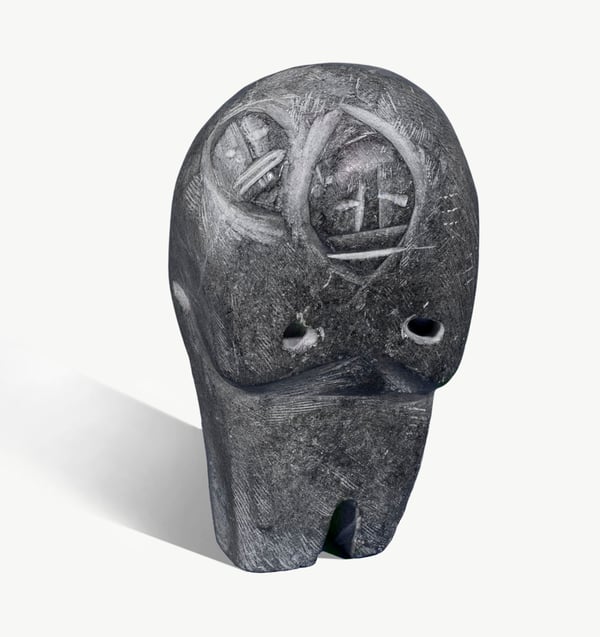
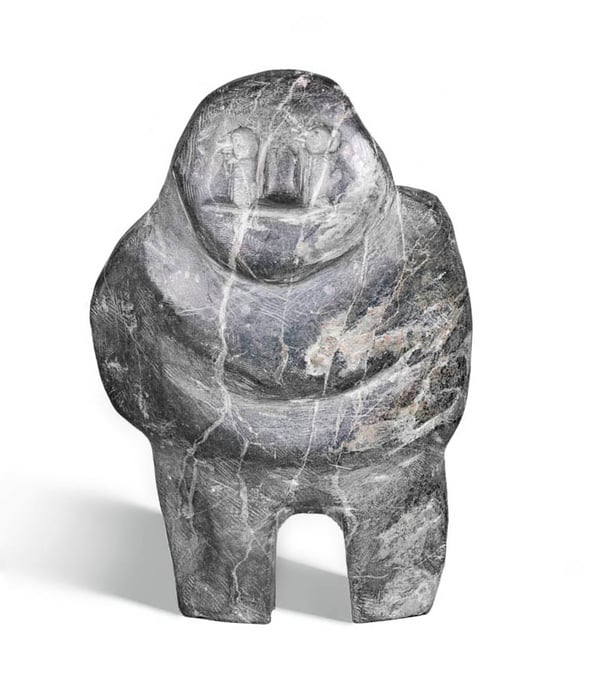
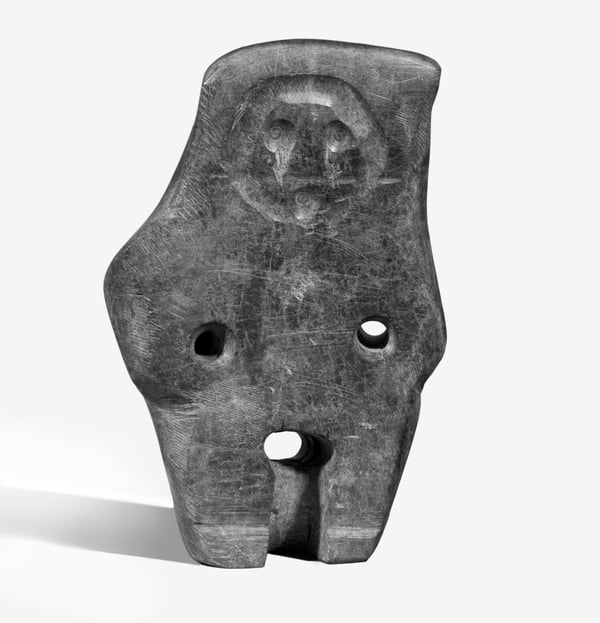
A prominent theme in Kavik's sculpture is the human figure, particularly mothers with children. He generally carved solitary, expressive figures, using deep grooves sparingly to indicate mouths, kamiik (boots), and parkas. Small drill holes frequently served to create eyes, nostrils, and the outlines of hands. His figures often had rough, unpolished textures, though works such as Somersaulting Man: As I Think of Myself (1964) were exceptions. Beginning in 1964, Kavik also worked in clay, producing thick ceramic vessels with three-dimensional figures of people and animals emerging from the sides, as well as clay sculptures that reflected his carving style.
Early supporters of Kavik's work included Robert Williamson, an anthropologist based in Rankin Inlet who purchased his sculptures when few others would, and George Swinton, a collector and curator who helped bring his art to audiences in southern Canada. Kavik continued working into his nineties. His first solo exhibition, Sculpture by John Kavik, was held in 1986 at Craft Ontario in Toronto. His work is held in the collections of the Art Gallery of Ontario, the Vancouver Art Gallery, the Winnipeg Art Gallery, and the University of Lethbridge Art Collection. He died in Yellowknife in March 1993.