Albert Dunington
1860 - 1928
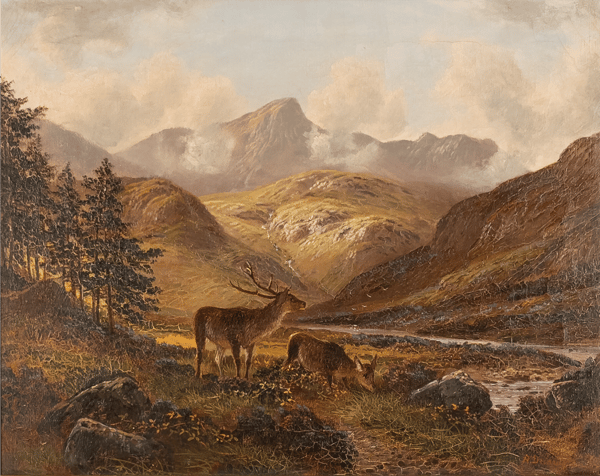
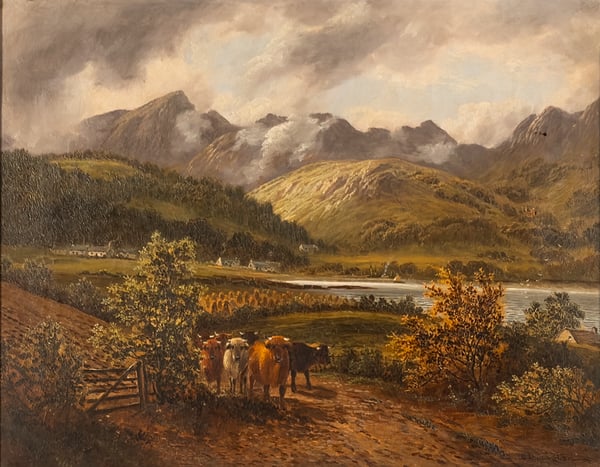
Albert Dunington Biography
1860 - 1928
Albert Dunington was born in 1860 in Lenton, Nottingham, England, and developed into a painter specializing in oil and watercolor works featuring landscapes, coastal scenes, and animals. His early years in Nottingham would have exposed him to the local artistic community and the influence of contemporary British painters working in the region during the late Victorian period.
Dunington later relocated to Manchester, where he lived at 45 Warwick Street and became part of the artistic community there. His work was influenced by the Staithes group of artists, including Laura Knight, whose approach to coastal subjects and plein air painting techniques had a significant impact on many artists of his generation. This influence is evident in his choice of subject matter and style, particularly his treatment of coastal scenes and maritime subjects.
Throughout his career, Dunington exhibited his work at several notable venues, including multiple exhibitions at Nottingham Castle Museum with the Nottingham Society of Artists, as well as showings at Manchester City Art Gallery. His paintings, often depicting familiar English coastal scenes such as Whitby with its distinctive swing bridge and harbor views, captured the maritime life and architecture of early twentieth-century England. These works, typically painted around 1900, documented buildings and scenes that remain largely intact today.
Albert Dunington died in 1928, leaving behind a body of work that represents the British regional painting tradition of the late Victorian and Edwardian periods. His coastal scenes and landscapes provide a visual record of English maritime communities during a time of significant social and technological change, bridging the gap between traditional Victorian subject matter and the emerging modern artistic movements of the early twentieth century.