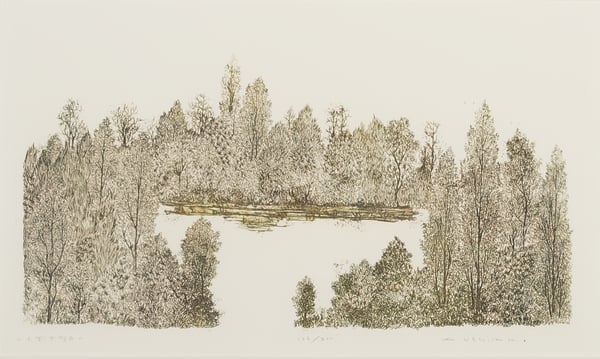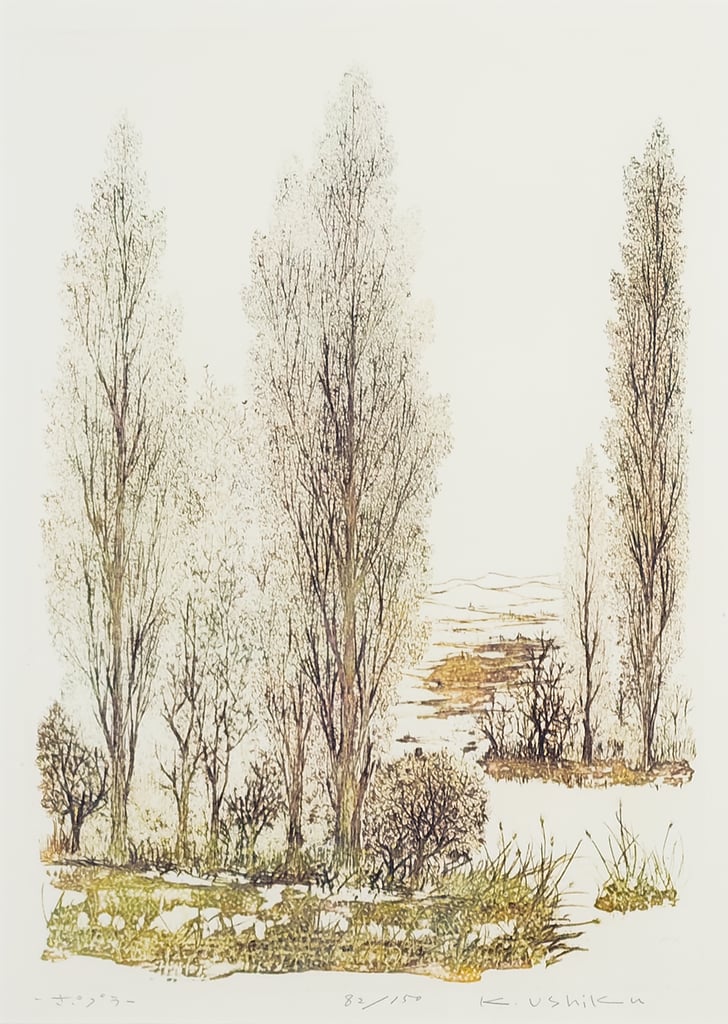
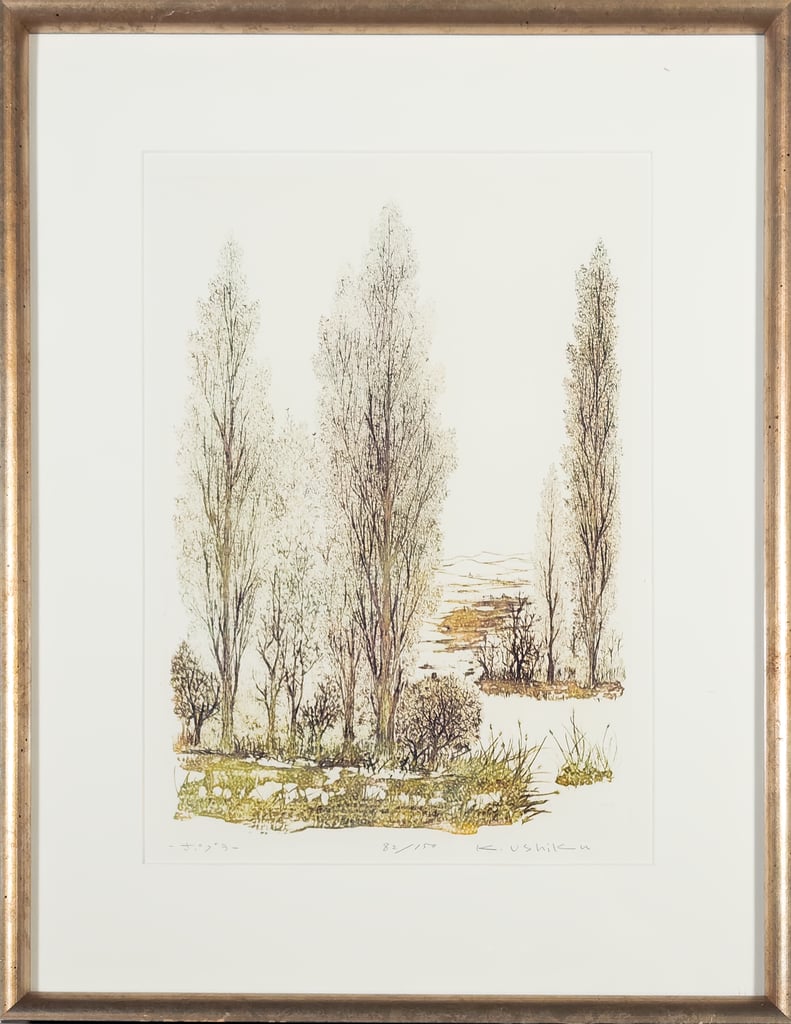
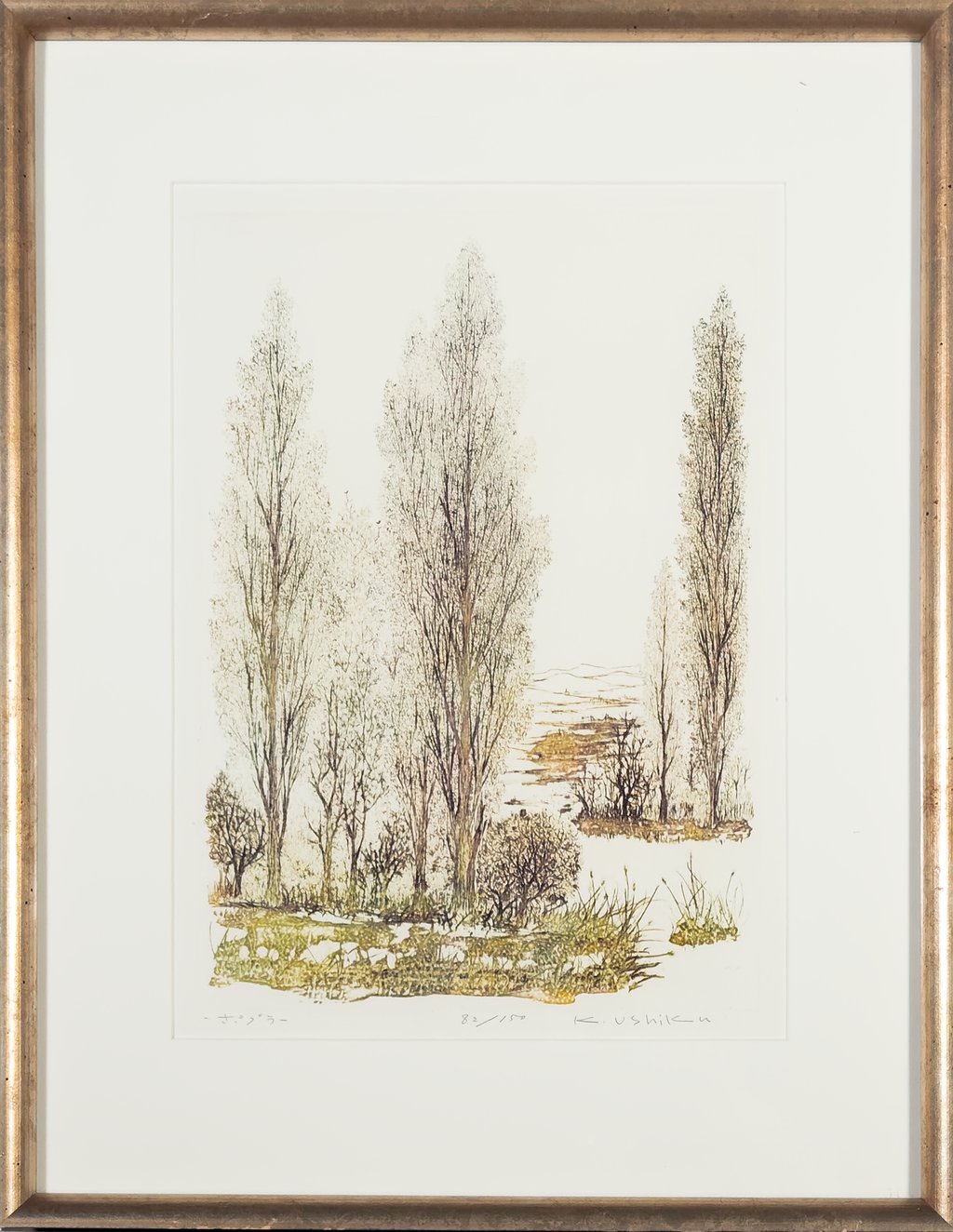
Untitled
25 x 19.5 in (63.5 x 49.5 cm) including frame
Printmaker Kenji Ushiku was born in Chiba Prefecture, Honshu, Japan, in 1922. He received his formal art education at the Tokyo School of Fine Art, where he studied printmaking and Western-style painting. Ushiku began publishing etchings in the early 1950s, and his work was highly sought after in mid-century Japan and the U.S. In his early career, he focused on still lifes, animals, and occasional scenes of bucolic farm life, often executed in colour etching and aquatint. Later, his works shifted towards abstraction, featuring relief prints with minimalist shapes and palettes.
Ushiku Kenji
1922 - 2012
Kenji Ushiku was born in Chiba Prefecture, Japan, in 1922 and received his formal art education at the Tokyo School of Fine Art, where he studied printmaking and Western-style painting. After graduating from this prestigious institution, he established himself as a printmaker and began publishing etchings in the early 1950s. His work gained recognition during the mid-century period, with demand for his prints extending beyond Japan to the United States.
Ushiku's artistic development showed a clear evolution in both subject matter and technique. His early career focused on representational subjects including still lifes, animals, and scenes of rural farm life, typically executed in color etching and aquatint techniques. During the 1960s and 1970s, his color etchings and aquatints were commissioned by publishers in both Japan and America. As his career progressed, his work shifted toward abstraction, incorporating relief prints characterized by minimalist shapes and simplified color palettes.
The artist maintained an active presence in the Japanese printmaking community through his membership in the Japan Print Association and participation in major exhibitions. He showed his work at the Tokyo International Print Exhibitions in 1957, 1960, and 1962, demonstrating his standing within the contemporary Japanese art scene.
Ushiku's work has been acquired by numerous institutional collections, reflecting the lasting value of his contributions to printmaking. His prints are held by the Chiba Prefecture Museum of Art, Chiba City Museum of Art, Sakura Museum of Art, and the National Museum of Art in Osaka. International recognition is evidenced by his inclusion in collections at the Brooklyn Museum of Art, Georgetown Museum of Art, Library of Congress, and Honolulu Museum of Art. Ushiku died in 2012, concluding a career that spanned approximately six decades.