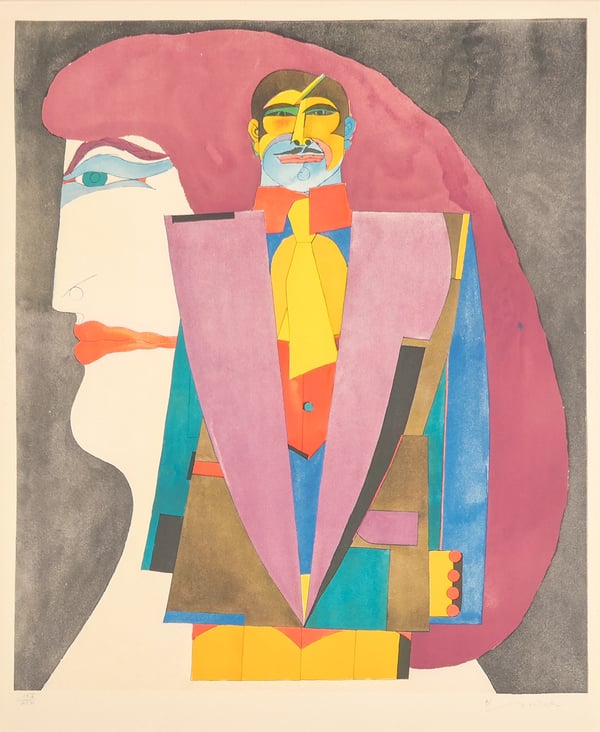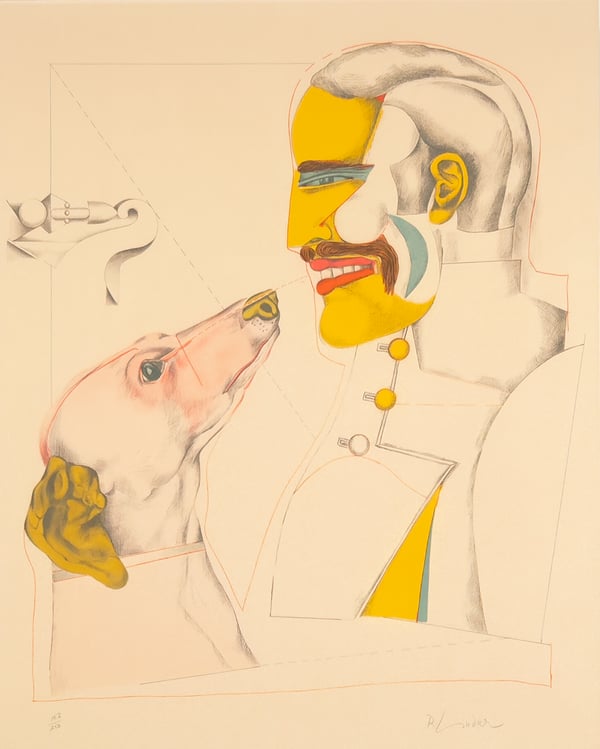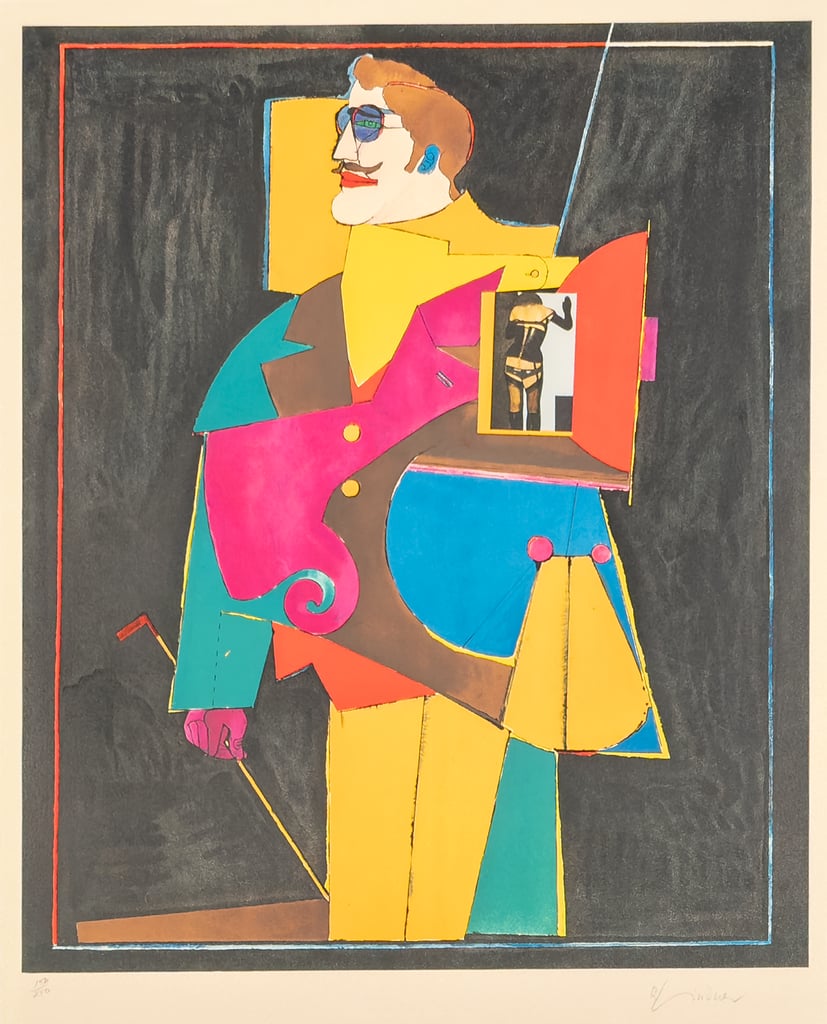
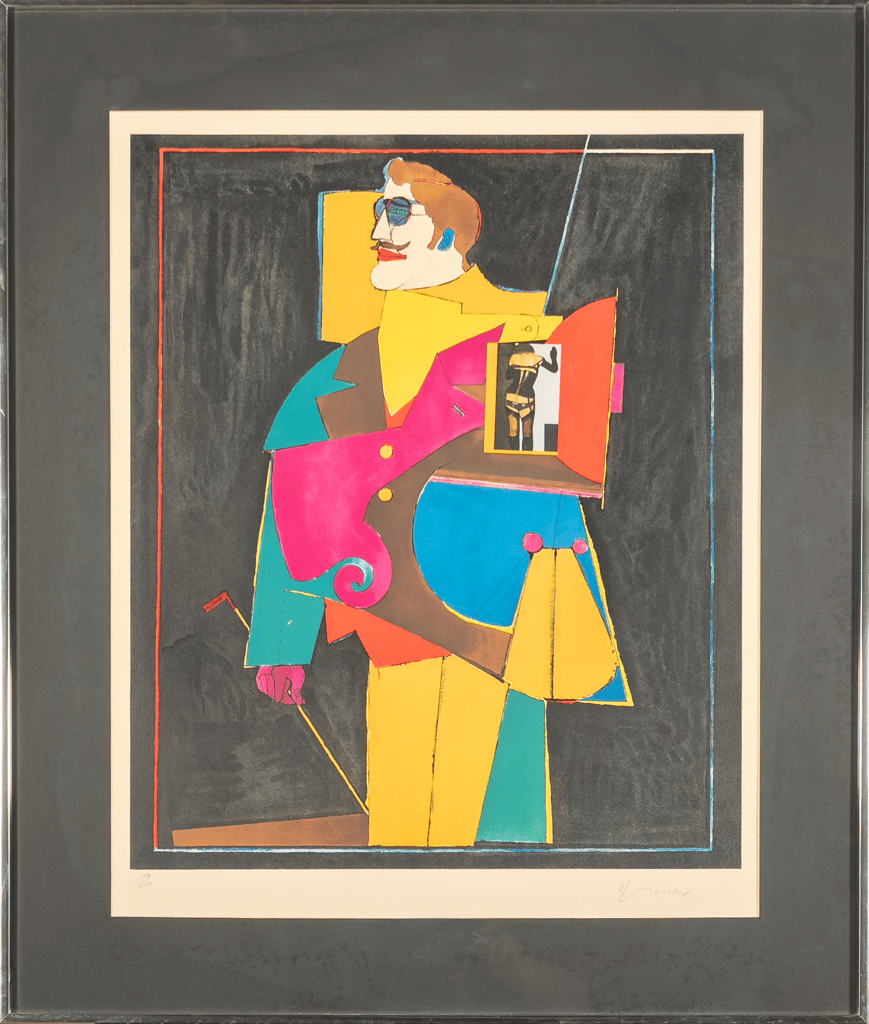
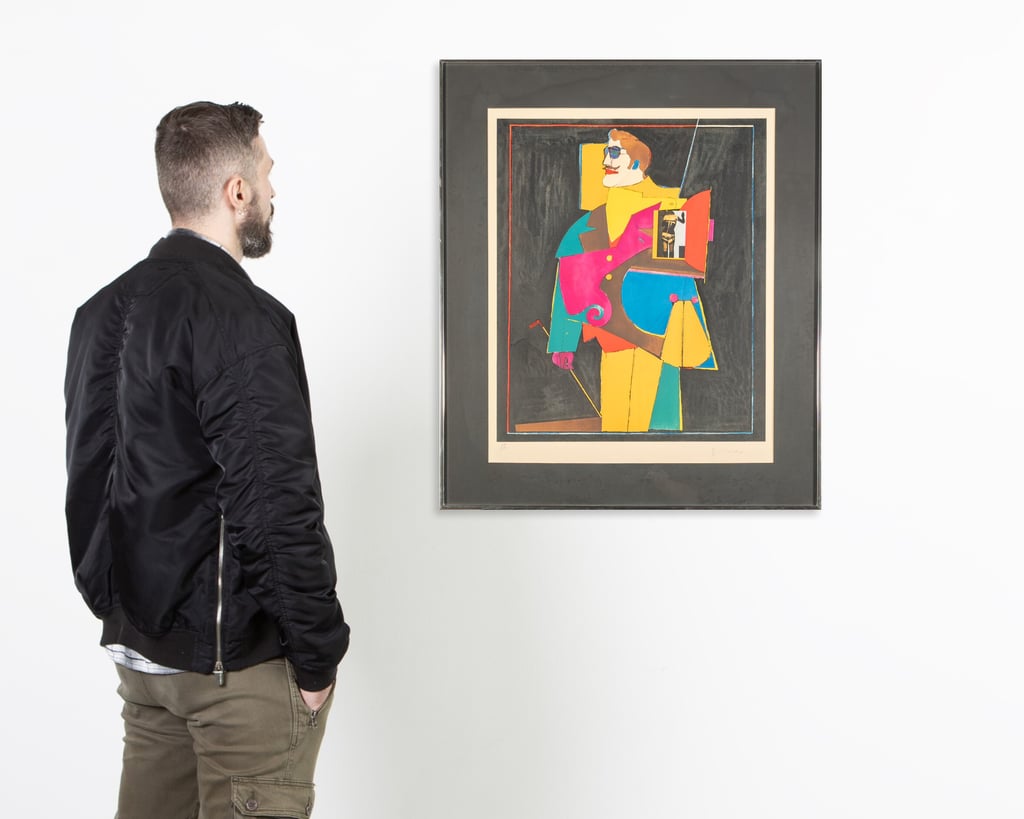
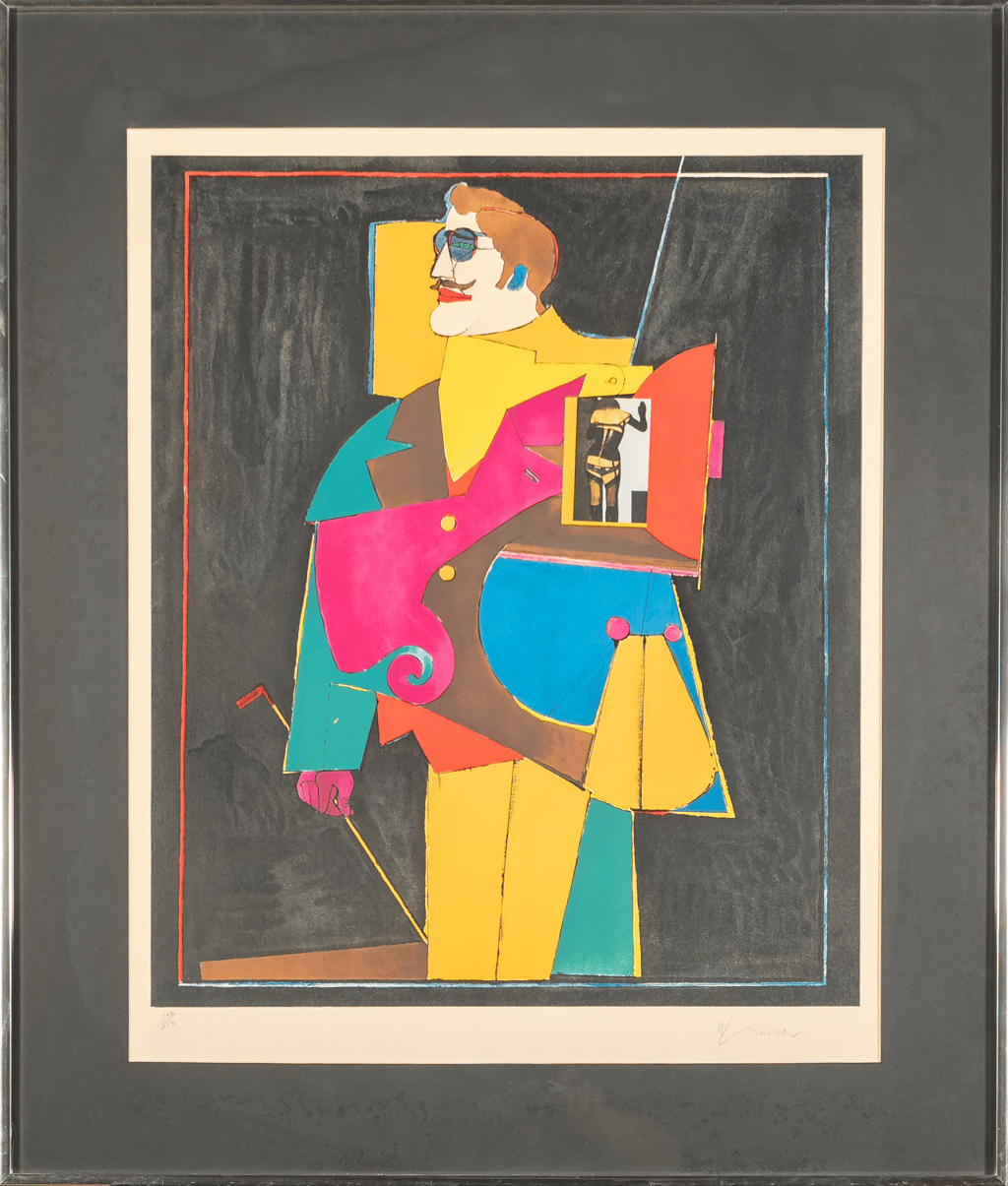
Heart; Afternoon portfolio
33 x 28 in (83.8 x 71.1 cm) including frame
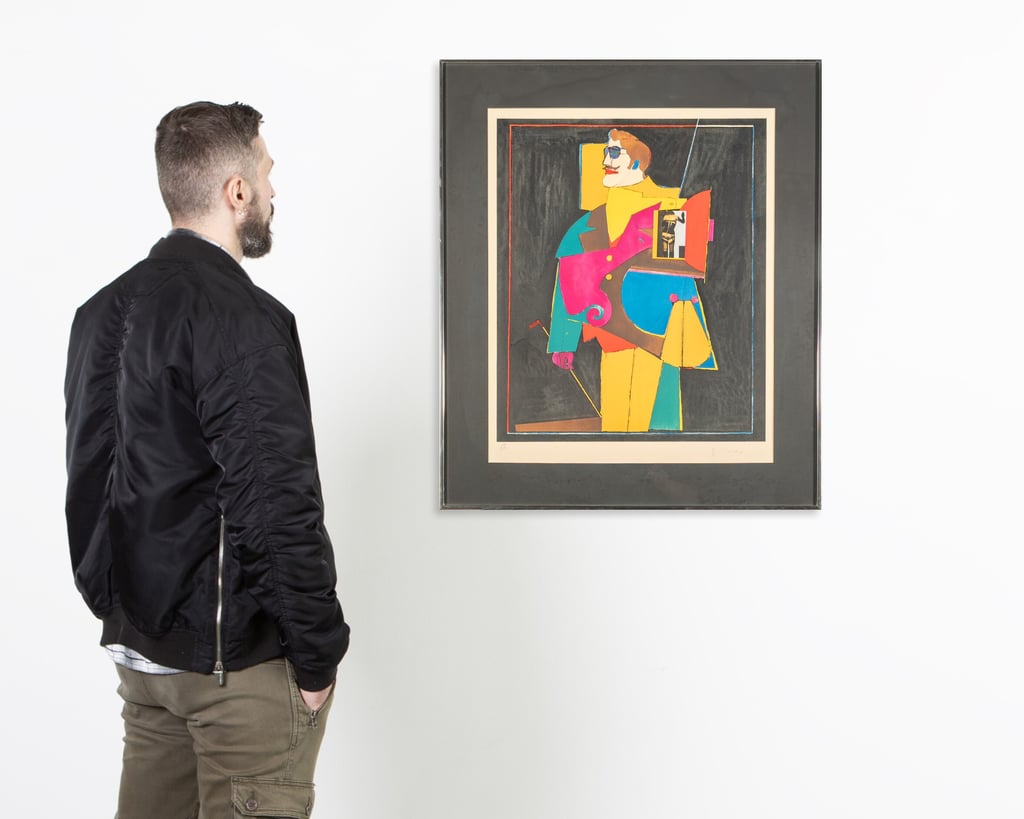
Richard Lindner
1901 - 1978
Richard Lindner was born on November 11, 1901, in Hamburg, Germany, to Jüdell (Julius) Lindner, a commercial clerk and member of the High German Jewish Congregation Altona, and Mina Bornstein, who was born in New York to German parents. In 1905, his family moved to Nuremberg, where his mother later operated a custom-fitting corset business beginning in 1913. Lindner initially worked as a commercial clerk before enrolling at the Kunstgewerbeschule (Arts and Crafts School) in Nuremberg in 1922, where he studied life drawing and oil painting. He became a Master Pupil under Professor Max Körner in 1926 and participated in various design competitions. From 1925 to 1927, he lived in Munich and studied at the Kunstakademie, later moving briefly to Berlin in 1927 before returning to Munich in 1929.
In 1930, Lindner married fellow student Elsbeth Schülein and established himself as a successful commercial artist in Munich's Schwabing district. He worked as an illustrator for newspapers and magazines including Münchner Neueste Nachrichten and Münchner Illustrierte Presse for the publisher Knorr and Hirth, where he served as art director. His commercial work during this period was noted in the graphic arts journal Das Zelt, marking the first publication about his artistic activities. However, his career in Germany was cut short when Hitler was declared Chancellor in 1933, forcing Lindner to flee to Paris due to his Jewish heritage.
Lindner lived in Paris from 1933 to 1941, working as a commercial artist and illustrator. His wife Elsbeth found success as a fashion illustrator for Vogue and Jardin des Modes. When World War II broke out in 1939, both Richard and Elsbeth were interned by French police as German refugees. Richard was imprisoned in a camp at Villemalard near Blois, while Elsbeth was released first and emigrated to the United States. In 1941, Richard arrived at the Port of New York on March 17, reuniting with his wife. He quickly established himself as a magazine and book illustrator, with one of his first published works appearing in Town & Country magazine in October 1941.
During the 1940s, Lindner worked as a successful freelance illustrator for major American publications and advertising companies, including commissions from the Container Corporation of America. He separated from Elsbeth in 1942 and they divorced in 1944, though she continued using the professional name Jacqueline Lindner. He became an American citizen on November 15, 1948. During this period, he formed friendships with fellow émigré artists and writers, including Saul Steinberg, Eugene Berman, René Bouché, and Hedda Sterne. In 1946, he decided to pursue painting seriously, completing his first major work, Wunderkind, and beginning studies for his significant painting The Meeting in 1953.
Lindner began his teaching career in 1952 as a part-time instructor in graphic expression at the Pratt Institute in Brooklyn, where he continued until 1966. His first solo exhibition was held at the Betty Parsons Gallery in New York in January-February 1954, though no paintings sold. In 1957, he received the William and Noma Copley Foundation Award and was appointed visiting artist at Yale University School of Art and Architecture. His work during this period featured distinctive imagery drawn from New York urban life, including streetwalkers, circus performers, and authority figures, rendered with harsh colors, hard outlines, and mechanical qualities that reflected both his European artistic training and American experiences.
Lindner's mature artistic style emerged in the 1960s, characterized by robotic, corseted female figures and enigmatic male characters that blended elements of German Expressionism, Surrealism, and Cubism with American Pop Art sensibilities. Major museums began acquiring his work, with the Museum of Modern Art purchasing The Meeting in 1962. He participated in documenta IV in Kassel in 1968 and had his first museum retrospective that year, traveling from Leverkusen to several German cities. In 1969, at age sixty-eight, he married French painter Denise Kopelman, and the couple began dividing their time between New York and Paris. Lindner was elected to the American Academy of Arts and Letters in 1972 and received the Lichtwark Award from the city of Hamburg in 1970. He died of a heart attack on April 16, 1978, at his New York apartment at age seventy-seven and was buried at Westchester Hills Cemetery in Hastings-on-Hudson, New York.
More work by Richard Lindner