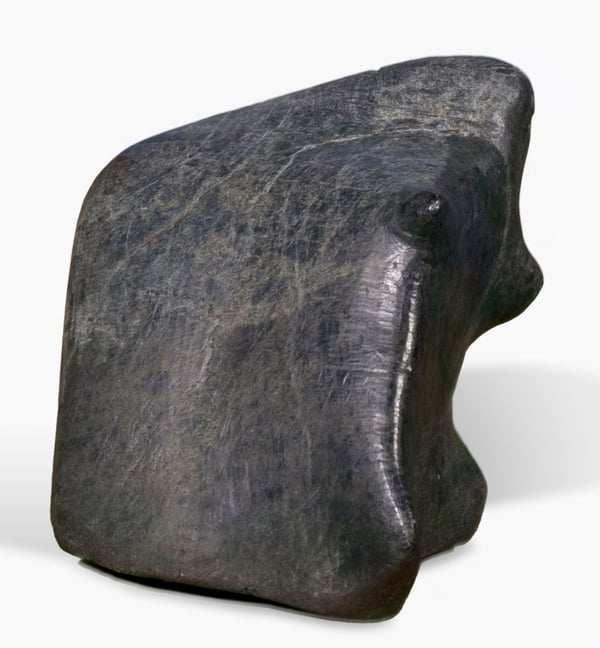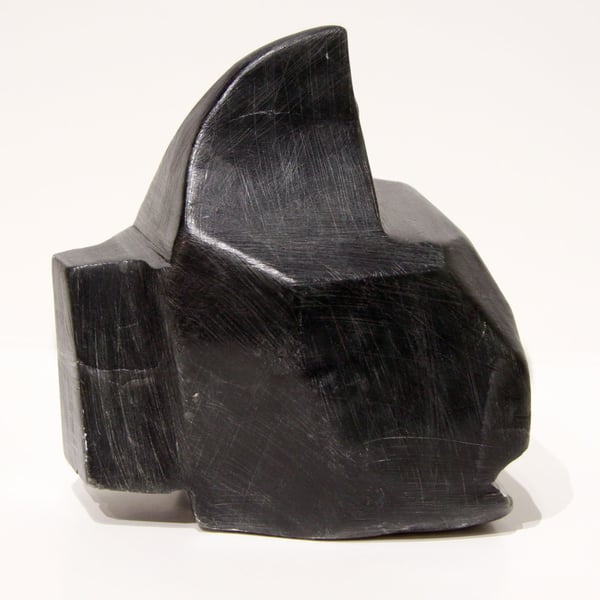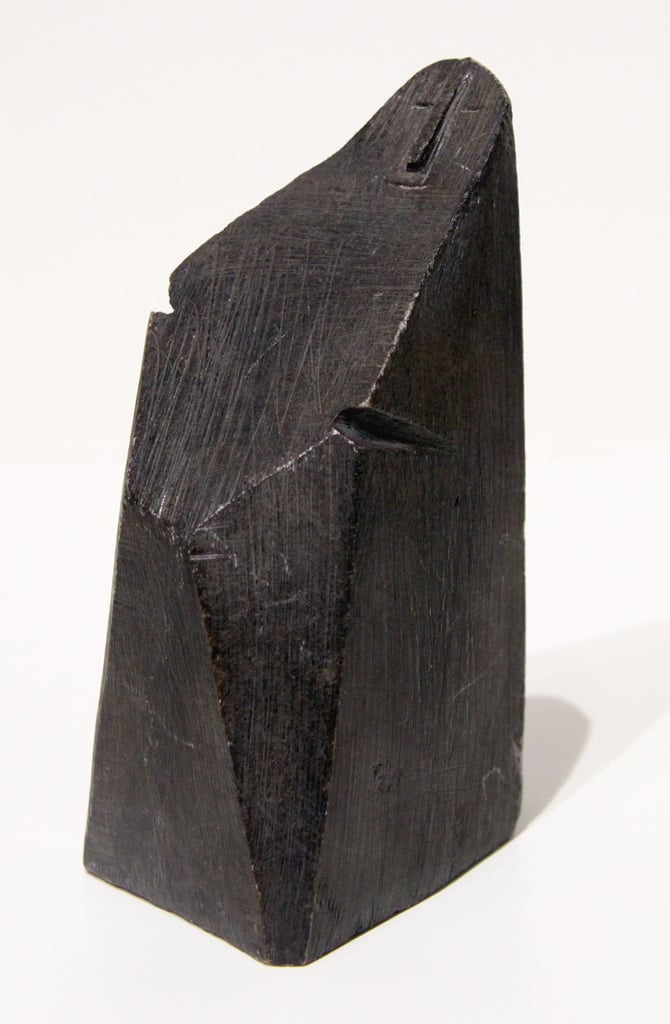
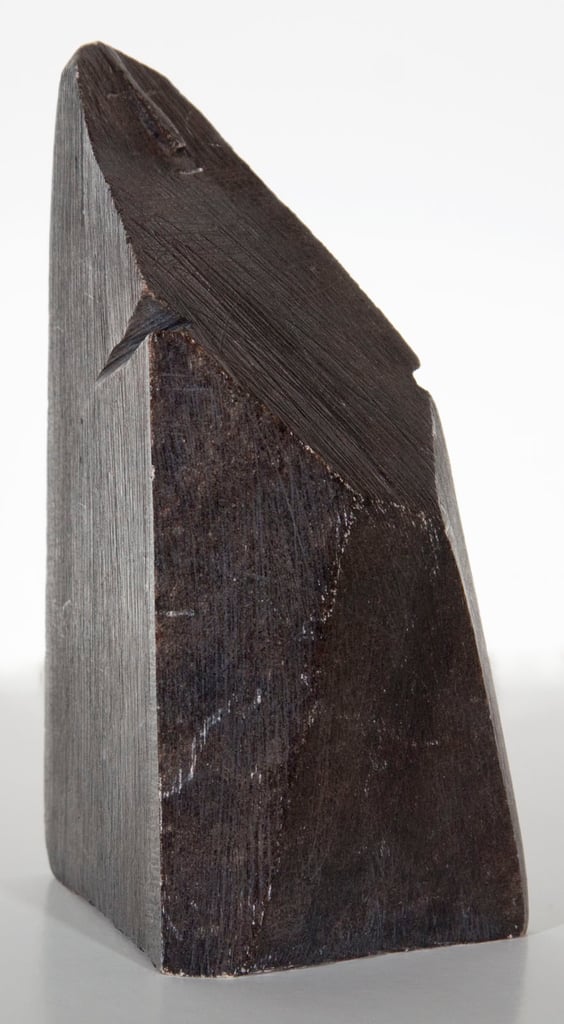
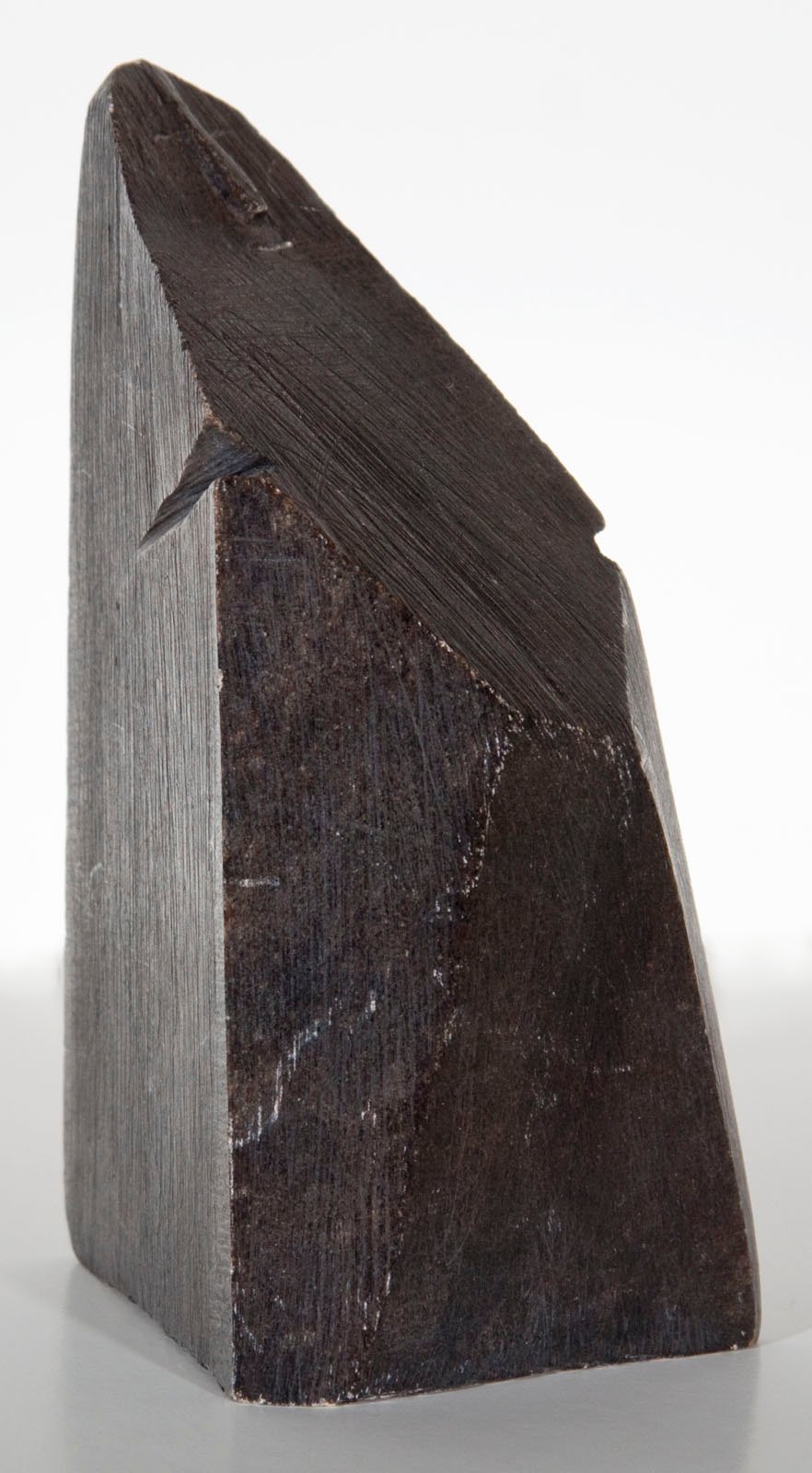
Reclining Figure
Sold
John Pangnark
1920 - 1980
John Pangnark (1920-1980) was an Inuk sculptor from Arviat, Nunavut, known for his abstract representations of human figures. Born at Windy Lake, Nunavut, he was a member of the Ahiarmiut, an inland-dwelling Inuit group that relied on caribou hunting. He lived a traditional lifestyle on the land until the 1950s, when famines in the late 1950s led to his relocation by the Canadian government to the coastal community of Arviat.
Pangnark began making stone sculptures for sale to the local cooperative in Arviat in the early to mid-1960s. His artistic practice evolved from realistic representations to increasingly abstract interpretations of the human form. His early works featured clearly defined anatomical features with polished surfaces and symmetrical contours. Over time, his figures became more simplified, with fewer defined limbs, ambiguous gender characteristics, and less detailed forms. His later works emphasized line and volume over anatomical accuracy, using the natural characteristics of the stone to suggest rather than explicitly define human features.
Pangnark's minimalist style was influenced by the properties of local stone deposits near Arviat, which were resistant to modification and required artists to work with the material's natural characteristics. He created smooth, flattened planes to delineate figures while incorporating the stone's original geometry and color variations. His technique involved polishing surfaces to varying degrees while retaining elements of the unworked stone, with facial features often indicated by simple etched lines that followed the rock's natural curves.
In 1970, Pangnark was selected as one of four Inuit artists to demonstrate carving at Expo '70 in Osaka, Japan. The same year, his work was featured alongside textile artist Jessie Oonark in a traveling exhibition hosted by the Canadian Museum of History. He was also represented in the "Sculpture/Inuit" exhibition that toured from 1971 to 1973. Pangnark continued creating sculptures until his death in 1980 at Rankin Inlet. His works are held in collections including the Canadian Museum of History, the National Gallery of Canada, and the Dennos Museum Center in Michigan.