
Lot #53
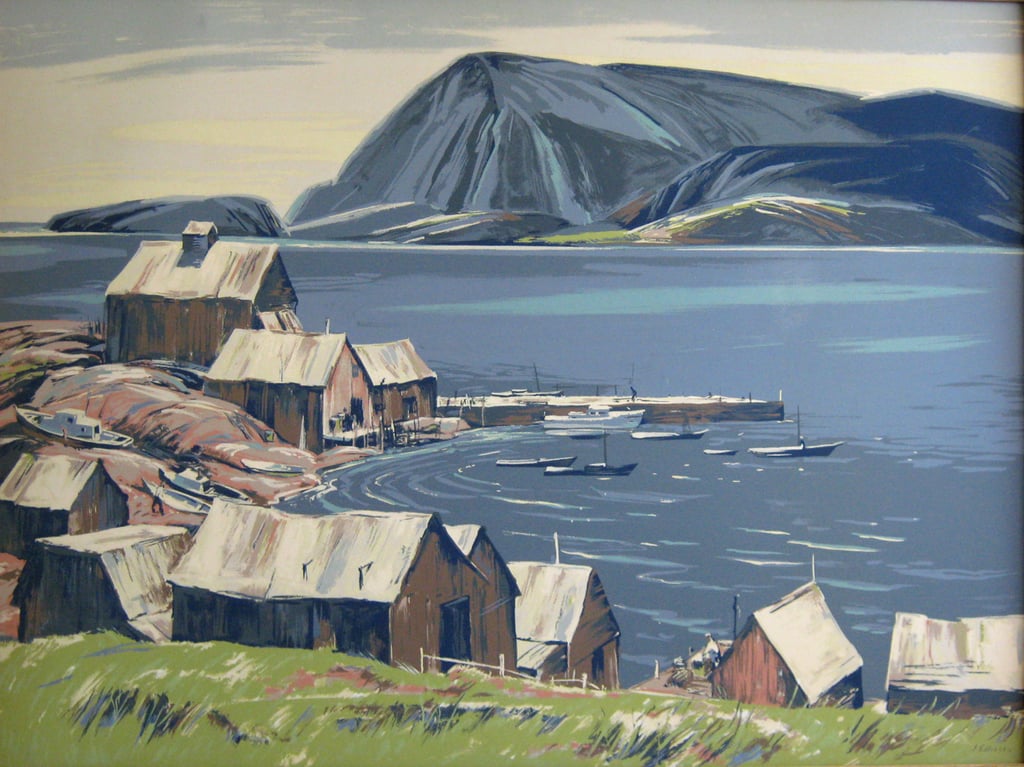
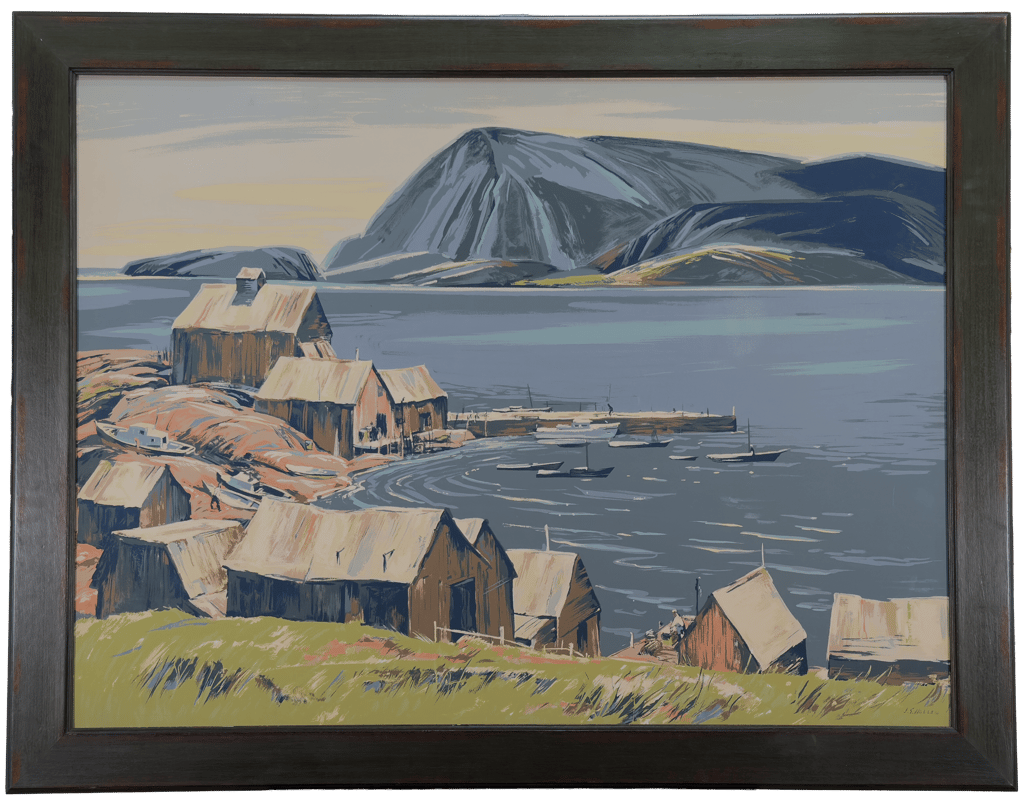
Cape Breton Harbour
silkscreen print,
circa 1950
30 x 40 in (76.2 x 101.6 cm)
35.25 x 45.25 in (89.5 x 114.9 cm) including frame
35.25 x 45.25 in (89.5 x 114.9 cm) including frame
The Sampson-Matthews prints are a celebrated collection of original silkscreen artworks produced by Toronto’s premier commercial firm, Sampson-Matthews Limited, primarily during the 1940s and 1960s. Their creation was deeply tied to the cultural climate of World War II, when there was a renewed push to promote Canadian art as part of national identity and morale. While some prints were commissioned privately, others emerged from institutional initiatives like the National Gallery of Canada’s "60 Canadian Landscapes for Schools, Offices and Homes"—a project spearheaded by a committee including A.Y. Jackson, A.J. Casson, and H.O. McCurry, the Gallery’s director.
Meticulously crafted using traditional silkscreen techniques, each print was layered in 12 to 15 oil-based colours on sturdy paperboard, ensuring both artistic integrity and longevity. The firm’s artistic direction was shaped by key figures like Franklin Carmichael, its head designer from 1922, and A.J. Casson, whose three-decade tenure helped elevate these works beyond commercial art into the realm of cultural significance. Featuring iconic Canadian landscapes—particularly those of the Group of Seven—the prints played a vital role in making art accessible to the public while reinforcing a distinctly Canadian visual language. Today, they are cherished not only as historical artifacts but as enduring symbols of art, heritage, and national pride during a transformative era.
Meticulously crafted using traditional silkscreen techniques, each print was layered in 12 to 15 oil-based colours on sturdy paperboard, ensuring both artistic integrity and longevity. The firm’s artistic direction was shaped by key figures like Franklin Carmichael, its head designer from 1922, and A.J. Casson, whose three-decade tenure helped elevate these works beyond commercial art into the realm of cultural significance. Featuring iconic Canadian landscapes—particularly those of the Group of Seven—the prints played a vital role in making art accessible to the public while reinforcing a distinctly Canadian visual language. Today, they are cherished not only as historical artifacts but as enduring symbols of art, heritage, and national pride during a transformative era.
This item was offered for auction on Bidlots.ca.
View Auction Results

Joseph Sidney Hallam
More work by Joseph Sidney Hallam
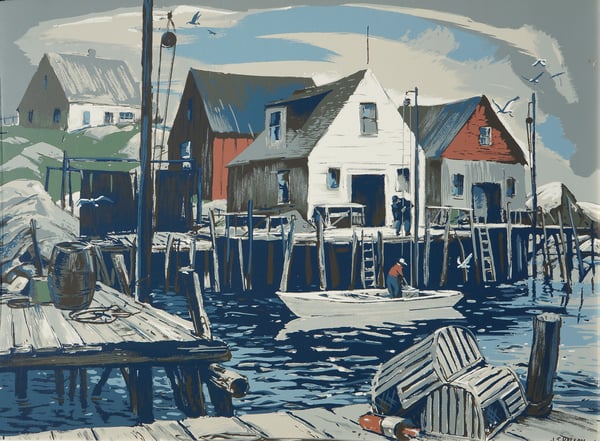
sampson-matthews silkscreen, circa 1950
30 x 40 in (76.2 x 101.6 cm)
Sold